Demonstration of a digitised energy system integration across sectors enhancing flexibility and resilience towards an efficient, sustainable, cost-optimised, affordable, secure, and stable energy supply.
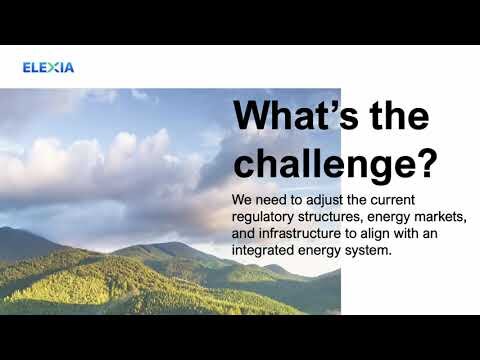
Nowadays, an effective, affordable decarbonisation of the European economy, along with increased operational flexibility and energy efficiency are more imperative than ever and raise a need to adapt the existing regulatory frameworks, energy markets, and infrastructures to an integrated energy system.
This is where ELEXIA comes in, aiming to integrate energy systems and facilitate the shift towards digital transition. This integrated system will allow optimisation and create flexibility for the power system and therefore achieve a more controllable electricity demand.
The project’s primary goal is to develop or improve validated tools for planning and managing integrated energy systems in a variety of conditions, as well as to link them across vectors and sectors towards creating a cost-optimised, flexible, and resilient energy system.
Thus, the project will create a concrete pathway to achieving independence from fossil fuels by harnessing the latent flexibility of the energy system through integration, data intelligence, and planning, towards the 2050 EU goals.
Videos
Follow ELEXIA on Youtube


The zero-emission vision for the development at Dokken stands strong and is absolutely necessary, but how are we going to make it happen? Bergen municipality is involved in a 4-year EU Horizon project with a focus on smart energy systems at area level. The research project will help city regions to reduce emissions, more efficient energy use and better utilization of resources. See what expectations the Norwegian partners have for ELEXIA in this short film.

Can a new city district in Norway, a vibrant urban region in Denmark, and one of Europe’s largest container ports develop smart, green, and flexible energy systems together? Yes! That’s what our EU Horizon ELEXIA Project demonstrates by using: 👦AI and Big Data 👩🦰Smart grids and IoT devices 👨🦳Social Science
Our News
ERMSS is a simulation tool designed to evaluate the impact of component failures within an energy system on end users.
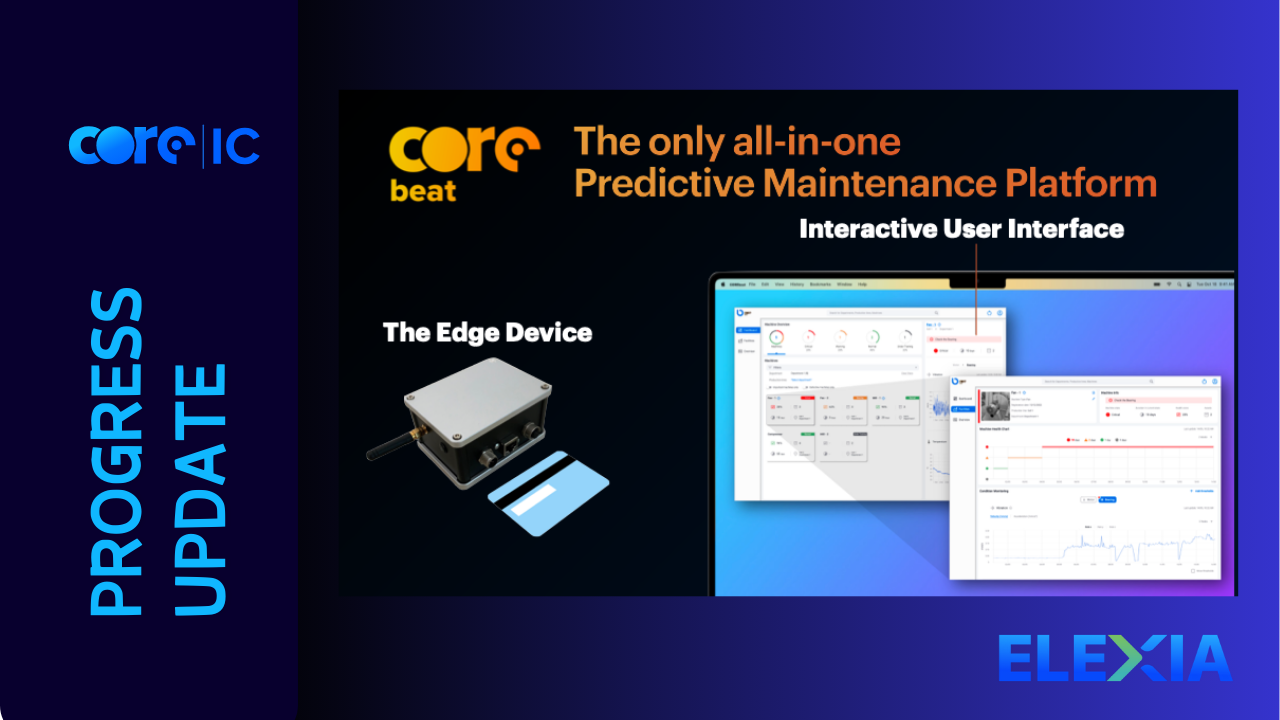
On October 10th, our partners CORE Innovation Group & CORE Innovation Centre, participated at the 18th Maintenance Forum - once again as an event sponsor and longtime exhibitor.
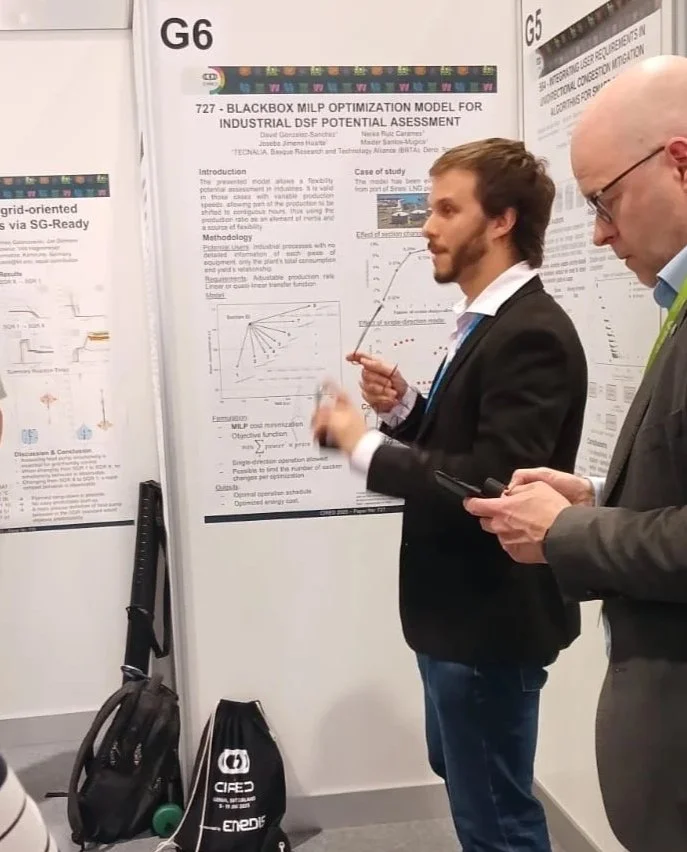
TECNALIA participated in the 21st International Conference on the European Energy Market (EEM) and the 28th Conference and Exhibition on Electricity Distribution CIRED 2025.
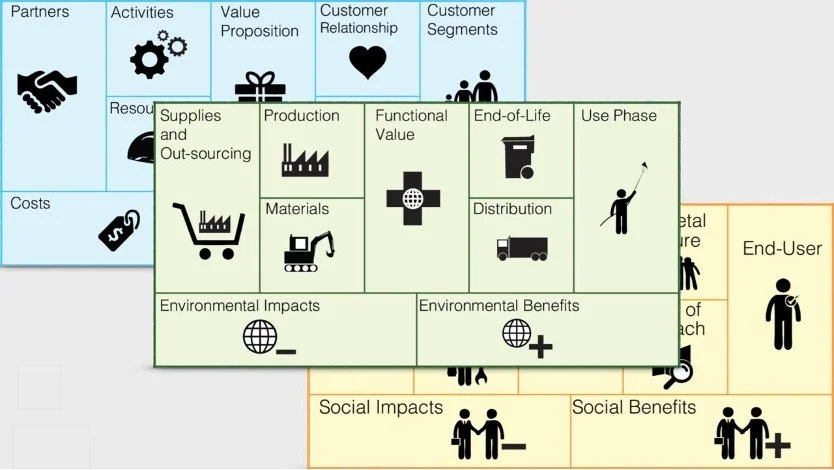
The session served as a key step in shaping the project ‘s exploitation strategy, ensuring that ELEXIA delivers value not only economically, but also environmentally and socially.
BRIDGE is a European Commission initiative which unites Horizon 2020 and Horizon Europe Smart Grid, Energy Storage, Islands, and Digitalisation Projects to create a structured view of cross-cutting issues which are encountered in the demonstration projects and may constitute an obstacle to innovation.
Høje-Taastrup Municipality has implemented smart sensors at the CityTown Hall as part of the Danish pilot in the ELEXIA project.
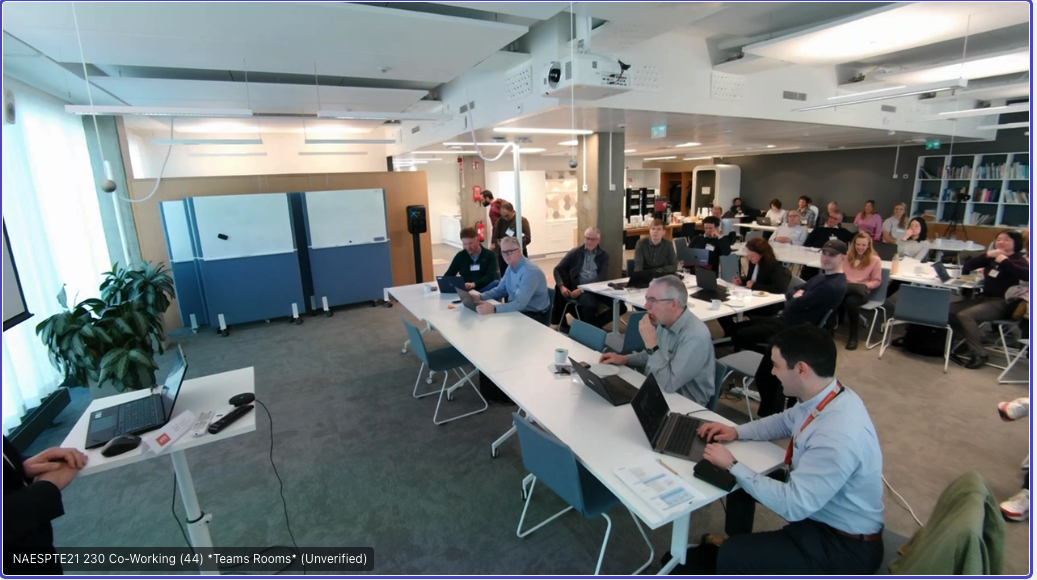
Our 6th General Assembly in Espoo, that took place on April 10-12, brought together partners to review the project's progress and plan next steps.
TECNALIA has successfully carried out the off-line validation of the Energy Management System (EMS) developed for the Portuguese Pilot.
Our partners CORE Group & CORE INNOVATION CENTER, attended the 2024 Industrial Production & Manufacturing Awards and brought back 4 awards.
TECNALIA has already completed the development of the flexibility models of the controllable energy resources at the Port of Sines in, Portugal.
The fifth consortium meeting of ELEXIA took place during the first week of October 2024, 24 months after the official start of the project and also 24 months before the scheduled end of the project.
n a commendable effort to reduce carbon emissions, the Høje-Taastrup municipality, part of the Elexia pilot site, chose to travel by train to attend a consortium meeting in Krakow.
A recent milestone in the project is the development of an event loop that acts as an API connection to Predicer.
The fourth consortium meeting of ELEXIA was held in on 17th and 18th of April in Krakow (Poland).
CORE IC together with the pilot partners are implementing this state-of-the-art solution in selected use-cases in the 3 pilot locations!
During February, APS focused on supporting NORCE on Task 1.1. (Stakeholder community engagement and social acceptance) and D1.1. and continuing supporting WP1 leader EDP on tasks the task 1.3 (Requirements and boundary conditions for Energy Management System (EMS) tool and System Planning Toolbox(SPT).
CLIMIFY, together with the municipality of Høje Taastrup, started inspecting the new Demo building of Mind Future.
The preliminary assessment of the potential available flexibility in pilot sites of the ELEXIA project is about to conclude.
ELEXIA has officially became part of the ENGINE Newsletter. In the 8th Edition of ENGINE, ELEXIA was introduced using the release of Project Overview Video.
The 3rd Consortium Meeting of ELEXIA was held in early October 2023, twelve months after the start of the project. This time the meeting was held in Sinès (Portugal), the city hosting the harbour of Sines, one of the three project pilots.
In the last months of the project, part of the focus has been on advancing the Requirements engineering and use case definitions for the pilot sites - and producing a preliminary version of the deliverable that defines the use cases for each pilot and a KPI methodology.
During September, APS focused on supporting EDP, which is leading the REQUIREMENTS ENGINEERING & STAKEHOLDER COMMUNITY ENGAGEMENT activities.
The Elexia Dokken Team was invited to present the ELEXIA project for EU Advisory Forum Vestland.
In buildings, their business domain, end users are both the occupants using indoor spaces, and the facility managers, operating those spaces. Within ELEXIA, they recently focused on new features for their feedback app “FeedMe”.
In recent months, the partners have studied and characterised the pilots, refining and defining the Use Cases that will shape the future phases of our project.
During the last months, the partnership was focused on designing a methodology for a preliminary assessment of the available flexibility in the different pilots.
LoRaWAN is a low-power, wide area networking system. It wirelessly connects devices to the internet and manages communication …
CORE is implementing the Asset Health Monitoring (AHM) tool, which is part of the real-time Energy Management Systems that will be developed through the ELEXIA project.
From the 28th to the 30th of March, it was held the annual BRIDGE meeting and ELEXIA was there, represented by our coordinator, Peter Breuhaus.